Mennen ankèt sou mekanis a pa ki Cistanche Deserticola trete maladi alzayme a lè l sèvi avèk rezo famasi ak validasyon eksperimantal
Dec 10, 2024
2 Rezilta
2.1 Depistaj nan engredyan prensipal yo aktif ak objektif engredyan nan Cistenche Deserticola
Yo te fouye Cistenche Deserticola nan baz done TCMSP a ak platfòm ADME Swis la, ak rechèch literati a nan 8 engredyan aktif prensipal, sètadi Suchilactone, Yangambin, quercetin, arakidonate, Marckine, Acteoside, Echinacoside, ak beta-sitostol, ak yon moun ki te pre-yo.

2.2 Depistaj nan Objektif Maladi ak preparasyon dyagram Venn, Rezo entèraksyon pwoteyin-pwoteyin (PPI) konstriksyon, epi ale ak KEGG
Analiz anrichisman te fèt nan OMIM, GeneCards, ak baz done NCBI, ak yon total de 2 013 AD ki gen rapò ak objektif yo te jwenn apre tès depistaj. Enpòte objektif eleman Cistenche Deserticola ak objektif AD ki gen rapò ak nan sit entènèt la sou entènèt dyagram Venny, ak jwenn yon total de 207 dwòg-maladi entèseksyon objektif, epi trase yon dyagram Venn, jan yo montre nan Figi 1A. Enpòte 207 entèseksyon an objektif nan baz done a fisèl analize entèraksyon an dwòg-maladi. Lè sa a, enpòte dosye a done nan lojisyèl an Cytoscape, epi apre degre a, fermeture ak antèt nimerik tès depistaj, 42 objektif ak 593 bor yo jwenn. Dapre gwosè a degre gwosè, TNF, AKT1, CASP3, PPARG, EGFR, MMP9, ESR1, HIF1A yo chwazi kòm jèn sib kle yo, ak pwoteyin-pwoteyin entèraksyon rezo dyagram lan trase (Figi 1B).

Yo nan lòd yo eksplike pwosesis la lavi nan objektif yo ki enplike nan tretman an nan AD pa Cistanche Deserticola, yo te baz done a Metascape itilize fè analiz anrichisman ale sou 42 objektif yo jwenn pi wo a, ki gen ladan twa pati: eleman selilè (CC), fonksyon molekilè (MF), ak pwosesis byolojik (BP). Pwojè yo te fè tès depistaj ak estanda a nan p≤ 0. Te zouti nan sou entènèt David itilize fè analiz anrichisman KEGG sou 42 objektif komen kle nan maladi ak dwòg, ak pwojè yo ak P≤0.05 yo te fè tès depistaj. Rezilta yo te montre ke yon total de 172 wout siyal yo te rich. Top 20 wout yo te chwazi dapre valè P a, epi yo te dyagram nan jarèt trase lè l sèvi avèk mikrobyoloji platfòm la sou entènèt (Figi 1D). Rezilta yo anrichisman te montre ke mekanis nan Cistenche deserticola nan trete AD ka pre relasyon ak chemen an PI3K-Akt, chemen kansè, adezyon fokal ak lòt wout.

Fig 1 (a) objektif maladi alzayme a ak eleman Cistanche objektif Venn Tablo; (B) rezo entèraksyon pwoteyin-pwoteyin; (C) ale anrichisman analiz dyagram jarèt; (D) Kegg anrichment analiz dyagram jarèt
2.3 Preparasyon nan dwòg-engredyan-maladi-chemen-sib kat jeyografik
Pa konbine rezilta yo anrichisman KEGG ak rezilta yo konstriksyon rezo PPI, yon dwòg-engredyan-maladi-chemen-sib rezo ka trase (Figi 2). Blue Triyang: Dwòg Cistanche Deserticola; Orange Triyang: AD maladi; limyè sèk vèt: engredyan prensipal nan dwòg la; Sèk jòn: chemen prensipal ki gen rapò ak maladi a trete pa Cistanche Deserticola; rektang vèt fonse: dwòg-maladi ki gen rapò sib; Edge: korelasyon ant nœuds

Fig 2 Total distans vwayaje pa sourit yo nan chak gwoup nan tès la navigasyon plas anvan ou ale nan etap la (x s, mm)
| Groupe | Jou 1 | Jou 2 | Jou 3 | Jou 4 | Jou 5 |
|---|---|---|---|---|---|
| Samri | 11,963.53 | 7,759.00 | 5,660.00 | 3,922.00 | 1,984.67 |
| Modèl | 11,977.35 | 8,417.67 | 5,465.38 | 7,329.67 | 5,517.67 |
| L-GCS | 11,964.33 | 8,330.33 | 6,226.87 | 4,789.33 | 3,867.47 |
Tab 3 chape latansi nan sourit nan chak gwoup nan tès la navigasyon plas (x s, s)
| Groupe | Jou 1 | Jou 2 | Jou 3 | Jou 4 | Jou 5 |
|---|---|---|---|---|---|
| Samri | 50.33 ± 1.24 | 45. 00 ± 43,43 | 39.67 ± 21.55 | 35. 00 ± 6.64 | 30.01 ± 1.64 |
| Modèl | 53. 00 ± 3.81 | 47. 00 ± 4.81 | 41. 00 ± 2.71 | 36. 00 ± 4.81 | 31. 00 ± 1.81 |
| L-GCS | 54. 00 ± 4.12 | 47,67 ± 4.34 | 39.67 ± 1.22 | 35,75 ± 2.45 | 36. 00 ± 1.81* |
| M-GCS | 52.67 ± 4.47 | 46. 00 ± 4. 00 | 35,75 ± 2.67 | 34. 00 ± 1.53 | 32. 00 ± 2.31* |
| H-GCS | 50.33 ± 2.11 | 45,67 ± 3.25 | 36.50 ± 2.31* | 35.75 ± 1.22* | 31.50 ± 1.81* |
| F | 2.84 |
*Remak: Konpare ak Samri Group,P <{{0}}. 0 5; Konpare ak gwoup modèl, † p <0.05; L-GCS ak H-GCS gwoup, ‡ p <0.05.
Si ou bezwen nenpòt modifikasyon plis, jis kite m 'konnen!

Fig 3 Pousantaj nan tan ki pase nan kadran an sib ak kantite fwa platfòm la travèse pa chak gwoup nan sourit nan tès la jijman pwofonde
2.4.2 Y eksperyans labirent
Rezilta yo nan eksperyans lan labirent Y te montre ke: konpare ak gwoup la SAMR1, tan gwoup la modèl la yo eksplore bra roman ak pousantaj la altènativ yo te siyifikativman redwi (P<0.05); compared with the Model group, the M-GCs group and H-GCs group's novel The arm exploration time was significantly increased (P<0.05); the spontaneous alternation rate of new arms in the GCs-administered group was significantly higher than that in the Model group (P<0.05), among which the spontaneous alternation rate of the M-GCs group was higher than that of the other administration groups ( P <0.05) (Fig. 4).

2.5 Efè GCS sou nimewo a ak mòfoloji nan newòn ipokanp sourit
Rezilta tach Nissl te montre ke selil yo piramid nerono nan gwoup la SAMR1 yo te wonn oswa oval, ak fòm konplè ak aranjman pwòp. Kò yo nissl entranglè yo te pwofondman tache ak nimewo a te pi gwo. Konpare ak gwoup la SAMR1, selil yo piramid neronal nan gwoup la modèl yo te mòfoloji nan selil yo somatik te kase, yo te aranjman an gaye, ak kò Nissl yo te alalejè ki gen koulè pal, ak nimewo a nan selil piramid konplè te siyifikativman redwi (P<0.05); compared with the Model group, the morphology of the pyramidal cells in the GCs administration group was more complete and the arrangement was more complete. Relatively neat, the number of complete pyramidal cells increased significantly (P<0.05). Among them, most pyramidal cells in the M-GCs group were complete in shape and more neatly arranged. The number of complete pyramidal cells was significantly higher than that in other drug administration groups. increased (P <0.05), as shown in Figure 5.

2.4.2 Y eksperyans labirent
Rezilta yo nan eksperyans lan labirent Y te montre ke: konpare ak gwoup la SAMR1, tan gwoup la modèl la yo eksplore bra roman ak pousantaj la altènativ yo te siyifikativman redwi (P<0.05); compared with the Model group, the M-GCs group and H-GCs group's novel The arm exploration time was significantly increased (P<0.05); the spontaneous alternation rate of new arms in the GCs-administered group was significantly higher than that in the Model group (P<0.05), among which the spontaneous alternation rate of the M-GCs group was higher than that of the other administration groups ( P <0.05) (Fig. 4).
2.5 Efè GCS sou nimewo a ak mòfoloji nan newòn ipokanp sourit
Rezilta tach Nissl te montre ke selil yo piramid nerono nan gwoup la SAMR1 yo te wonn oswa oval, ak fòm konplè ak aranjman pwòp. Kò yo nissl entranglè yo te pwofondman tache ak nimewo a te pi gwo. Konpare ak gwoup la SAMR1, selil yo piramid neronal nan gwoup la modèl yo te mòfoloji nan selil yo somatik te kase, yo te aranjman an gaye, ak kò Nissl yo te alalejè ki gen koulè pal, ak nimewo a nan selil piramid konplè te siyifikativman redwi (P<0.05); compared with the Model group, the morphology of the pyramidal cells in the GCs administration group was more complete and the arrangement was more complete. Relatively neat, the number of complete pyramidal cells increased significantly (P<0.05). Among them, most pyramidal cells in the M-GCs group were complete in shape and more neatly arranged. The number of complete pyramidal cells was significantly higher than that in other drug administration groups. increased (P <0.05), as shown in Figure 5.
2.6 Efè GCS sou ekspresyon nan PI3K-Akt chemen ki gen rapò ak pwoteyin ak pwoteyin tau nan ipokanp sourit
Rezilta tach imunohistochimik te montre ke konpare ak gwoup la SAMR1, ki kantite selil pozitif eksprime PI3K ak P-Akt nan zòn nan CA1 ipokanp nan gwoup la modèl te siyifikativman redwi (P<0.05), and the number of positive cells expressing P-Tau was significantly increased (P < 0.05); compared with the Model group, the number of positive cells in the hippocampal CA1 area of PI3K and P-Akt in the GCs group was significantly increased (P<0.05), and the number of positive cells expressing P-Tau was significantly reduced (P<0.05 ); among them, the number of positive cells expressing PI3K and P-Akt in the CA1 area of mouse hippocampus was significantly increased in the M-GCs group compared with other GCs administration groups (P<0.05), see Figure 6.

Fig 7 Western blot tablo teren eksperimantal
Tab 4 Valè absorption Strip (x s)
| Groupe | Jou 1 | Jou 2 | Jou 3 | Jou 4 | Jou 5 |
|---|---|---|---|---|---|
| Samri | 50.33 ± 1.24 | 45. 00 ± 43,43 | 39.67 ± 21.55 | 35. 00 ± 6.64 | 30.01 ± 1.64 |
| Modèl | 53. 00 ± 3.81 | 47. 00 ± 4.81 | 41. 00 ± 2.71 | 36. 00 ± 4.81 | 31. 00 ± 1.81 |
| L-GCS | 54. 00 ± 4.12 | 47,67 ± 4.34 | 39.67 ± 1.22 | 35,75 ± 2.45 | 36. 00 ± 1.81* |
| M-GCS | 52.67 ± 4.47 | 46. 00 ± 4. 00 | 35,75 ± 2.67 | 34. 00 ± 1.53 | 32. 00 ± 2.31* |
| H-GCS | 50.33 ± 2.11 | 45,67 ± 3.25 | 36.50 ± 2.31* | 35.75 ± 1.22* | 31.50 ± 1.81* |
| F | 2.84 |
*Remak: Konpare ak Samri Group,P <{{0}}. 0 5; Konpare ak gwoup modèl, † p <0.05; L-GCS ak H-GCS gwoup, ‡ p <0.05.
3 Diskisyon
Maladi alzayme a se yon maladi komen neurodégénératives. Kòm yon maladi kwonik ak aparisyon trètr ak pwogresyon kontinyèl, li se karakterize pa manifestasyon klinik nòmal tankou memwa, lang, koyisyon, pèsonalite ak fonksyon konpòtman [15,16]. Koulye a, patojenèz la nan maladi alzayme a se konplèks, e gen anpil teyori tankou Aβ depozisyon amiloid, estrès oksidatif nan newòn, neuroinflammation, fosforilasyon nòmal nan pwoteyin Tau ak entesten Flora move balans. Pami yo, apoptoz la enflamatwa nan newòn ki te koze pa fosforilasyon pwoteyin tau se yon mekanis enpòtan nan anons-pwovoke defisyans mantal [17,18]. Pwoteyin Tau se yon pwoteyin ki asosye ak microtubule (kat) ki asosye ak axon nerono. Fonksyon prensipal li se ankouraje fòmasyon nan microtubules, kenbe estabilite yo ak kontwole transpò axonal [19,20]. Twòp fosforilasyon nan pwoteyin tau ap pèdi kapasite li nan mare nan microtubules, sa ki lakòz microtubule depolymerization, axonal malfonksyònman ak tangles neurofibrillary, ki mennen ale nan koripsyon nerono ak apoptoz [21]. Etid yo te jwenn ke yon varyete de ki gen rapò ak wout siyal yo pre relasyon ak fosforilasyon nan pwoteyin tau, nan mitan ki entranglè fosfatidilinositol kinaz/pwoteyin kinaz B (PI3K/Akt) chemen an jwe yon wòl nan fosforilasyon nan fosforilasyon nan enfomasyon, ak ABNOME yo nan fosforilasyon nan fosforilasyon, ak APHOROME NETOCHINAL NAN PWOCHÈN POU ENPETYE KOU. [22].
Nan etid la pi wo-mansyone rezo famasi, GO ak KEGG anrichisman analiz te montre ke I3K/Akt chemen an jwe yon wòl kle nan amelyorasyon nan AD pa Cistenche Deserticola, epi li se pre relasyon ak apoptoz selil, fòmasyon plak senil, ak neronal tangles; Objektif yo komen nan GCs ak AD yo te fè tès depistaj nan baz done a fisèl, nan mitan ki AKT1 te yon sib enpòtan enpòtan ak yon pwoteyin kle nan chemen an PI3K/AKT. PI3K, kòm molekil la en nan Akt, se yon espesifik intracellular fosfatidilinositol kinaz [23]. Nan mamifè, fanmi an PI3K gen kalite I, II, ak III isozymes, nan ki kalite I isozymes yo se objektif yo regilasyon prensipal nan chemen an PI3K-Akt. Lè izozim kalite IA nan PI3K mare nan pwoteyin tankou kinaz reseptè tirozin, PI3K ka fosforil ak aktive, fosforil sib la PIP2 deyò manbràn selilè a yo vin sib la PIP3, ki atire ak fosforil AKT1, A. Manm nan fanmi an Akt gen kapasite nan kontwole fonksyon byolojik, ki gen ladan siviv selil, pwopagasyon, metabolis, ak kwasans. Sou yon bò, fosforil AKT1 ka fosforil agonist lanmò selil la (move) ki asosye ak β-selil CLL/lenfom (BCL -2) nan serin rezidi 136, kidonk anpeche apoptoz selil [27]. Nan lòt men an, li ka kontwole en pwoteyin mTOR, GSK3β, ak FOXO, kidonk diminye pwodiksyon an nan P-tau pwoteyin [28-30].
Depi ka ogmantasyon nan pwoteyin P-tau dwe konsidere kòm yon karakteristik Hallmark pathologie nan AD, li se kwè yo dwe pre relasyon ak n bès mantal ak pèt sinaptik. Se poutèt sa, deklanchman an nan PI3K/Akt chemen siyal ka jwe yon wòl enpòtan nan amelyore maladi alzayme la.
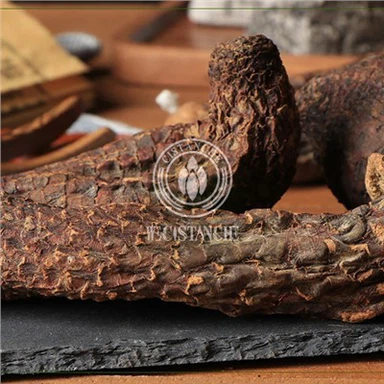
Cistenche dezè a se tij la charnèl ak fèy sèk lach nan plant la dezè Cistenche. Li se cho nan lanati, dous ak sale nan gou, ak ki dwe nan ren an ak meridyen gwo trip. Li se yon medikaman pou tonifye ren an ak ranfòse Yang, imidite trip yo ak soulaje konstipasyon [31]. Li gen efè anti-apoptoz, anti-oksidasyon, reglemante otofag selil ak neuroendocrine, amelyore fòs fizik, ak amelyore aprantisaj ak koyisyon. Li gen valè enpòtan nan prevansyon ak tretman maladi sistèm nève santral [32]. Anpil literati anrejistre ke Cistenche deserticola ka pwoteje ak motive asid amine nan otofag la nan newòn blese pa serebral ischemia-reperfusion, amelyore newonal estrès oksidatif nan rat demans, pwoteje microglial repons enflamatwa pa lipopolysaccharide, ak amelyore. Eksperyans konpòtman ki anwo yo te montre ke konpare ak gwoup la modèl, sourit yo nan gwoup la GCS te gen amelyorasyon siyifikatif nan aprantisaj ak koyisyon (P<0.05); Nissl staining experiments found that the number of pyramidal cells in the GCs group was significantly increased compared with the Model group, with complete morphology and neat arrangement (P<0.05); immunohistochemistry and Western blot experiments found that GCs could significantly increase the expression of PI3K and P-Akt proteins in the hippocampus of SAMP8 mice and significantly reduce the expression of P-Tau protein (P<0.05), which indicates that Cistanche deserticola may play a role in improving Alzheimer's disease by regulating the PI3K-Akt signaling pathway and affecting the production of P-Tau. This study used SAMP8 mice to construct an Alzheimer's disease model. Through network pharmacology, the main mechanism of action of Cistanche deserticola in treating Alzheimer's disease was explored, and a preliminary discussion of the mechanism of action and the optimal drug dose were explored. The subsequent exploration will continue to explore the mechanism of action and efficacy of Cistanche deserticola in improving the learning and cognitive function of AD model animals, in order to provide more modern scientific basis for the development of Cistanche deserticola products for the prevention and treatment of AD.