Antioxidant Effect Of Total Glycosides Of Cistanche Deserticola On Mouse Tissues
Mar 10, 2023
Objective: To study the antioxidant effect of total glycosides of cistanche deserticola (GCS) on mouse tissues. Methods: The activity of SOD, the content of MDA, and lipofuscin in the heart, liver, brain, and kidney of mice were determined by pyrogallol autoxidation, thiobarbituric acid (TBA), and fluorescence methods. Results: GCS (125mg/kg, 250mg/kg) group could significantly increase the activity of SOD in brain and kidney tissue, increase the activity of SOD in heart and liver tissue at 250mg/kg, and significantly reduce the content of MDA and lipofuscin in each tissue. Conclusion: The results suggest that GCS can effectively improve the antioxidant capacity of tissues and prevent tissue lipid peroxidation damage.
Keywords: total glycosides of cistanche deserticola, superoxide dismutase, malondialdehyde, lipofuscin, antioxidant
Cistanche deserticola ,According to modern pharmacological research, Cistanche deserticola can enhance the immune function of the body [1], promote memory, improve intelligence [2], and resist aging [3]. The crude preparation of Cistanche deserticola significantly reduces the content of myocardial lipofuscin [3]. In this paper, the effects of total glycosides of Cistanche deserticola (GCS) on antioxidation and lipofuscin content in the heart, liver, brain, and kidney of mice were studied.

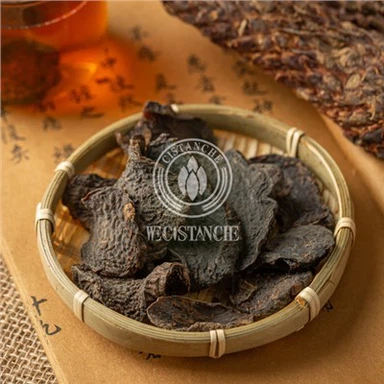
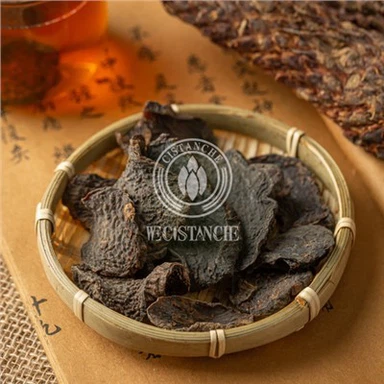
Dragon herbs cistanche
【Ask for more】 Email: xue122522@foxmail.com / Whats App: 0086 18599088692 / Wechat: 18599088692
1 Material
1.1 The total glycosides of cistanche deserticola are prepared by Xinjiang Medical College
1.2 Extracted and identified by the phytochemistry room of the Department of Pharmacy [4].
Pyrogallol, produced by Zunyi No. 2 Chemical Plant; Thiobarbital acid, produced by Shanghai No. 2 Reagent Factory; Quinine, Shanghai Second Reagent Factory; 1,1,3,3-tetraethoxysilane (TEP) and Coomassie brilliant blue are products of Sigma.
1.2 Animal NIH mice, provided by the Animal Experiment Center of Xinjiang Institute of Endemic Diseases.

Superman herbs cistanche
2 Methods and results
2.1 Effect of GCS on SOD activity and MDA content in mouse tissues: 40 five-month-old NIH healthy mice weighing (33.5 ± 2) g, both male and female, were randomly divided into normal saline control group (NS) and different doses of GCS group (62.5125250 mg · kg-1 · d-1, ig) according to body weight balance, for 30 consecutive days; In addition, 10 one-month-old NIH young mice, weighing (15.2 ± 1.5) g, ig with the same volume of NS, were given once a day for 30 days. Each group was killed by cervical spondylosis 1.5 hours after the last administration, and the chest and abdomen were opened. The heart, liver, brain, and kidney tissues were immediately taken out, washed with frozen NS, weighed, ground, and prepared tissue homogenate, centrifuged for 30 min at 3000 r · min-1, and its supernatant was taken for measurement. The activity of SOD in tissues was determined by the pyrogallol autoxidation method [5]; The content of MDA in tissue was measured by the TBA color method [6]; Tissue protein was determined by Coomassie brilliant blue method [7]. The results showed that the activity of SOD in heart and liver tissue of the 5-month-old NS group was significantly lower than that of the 1-month-old NS group, and the content of MDA in each tissue was significantly higher than that of the 1-month-old NS group. Compared with the 5-month-old NS group, the activity of SOD in the heart and liver tissue of the GCS group was significantly increased at 250 mg · kg-1, which was close to that of the 1-month-old NS group; The content of MDA in the heart and liver tissue of 125250 mg · kg-1 group decreased, close to that of 1-month-old group; The 125250 mg · kg-1 group significantly increased the activity of SOD in brain and kidney tissues, and significantly decreased the content of MDA, which was close to the 1-month-old group (Table 1).

Chinese herb cistanche
2.2 Effect of GCS on the content of lipofuscin in mouse tissues: 40 healthy 5-month-old NIH mice, weighing (32 ± 1.5) g, both male and female, were divided into four groups according to the balance of body weight, NS control group and different doses of GCS group (62.5125250 mg · kg-1 · d-1, ig), for 30 consecutive days, and 10 one-month-old NIH mice, weighing (15 ± 1.5) g, ig, the same volume of NS, once a day, for 30 consecutive days. Each group was killed 1.5 hours after the last administration, the cervical vertebra was removed, the heart, liver, brain, and kidney tissues were taken, and the water was absorbed with filter paper, Weighing 0.2g of each tissue. According to Sohal's [8] method, the tissue is divided into 8 ml homogenate with a chloroform-methanol (2:1) mixture. Incubate it in a water bath at 40 ℃ for 5 min, and centrifuge it at 3000 r · min-1 for 10 min. Take the chloroform layer and place it on the Shimadzu RF-540 fluorescence spectrophotometer, with an excitation wavelength of 351.6 nm and emission wavelength of 451.1 nm. Measure the fluorescence intensity according to quinine sulfate 1 μ The fluorescence intensity of g · ml-1 is 100 units, and the fluorescence counting unit per gram of wet tissue is calculated, expressed in U · g-1.

Table 1 Effect of total glycosides of Cistanche deserticola on SOD activity and MDA content in heart, liver, brain and kidney of mice
The results are shown in Table 2. Compared with the 5-month-old NS group, the content of lipofuscin in the liver and brain of the 1-month-old NS group is significantly lower than that of the 5-month-old NS group. The content of lipofuscin in the heart tissue of the GCS250mg · kg-1 group is significantly lower, and the content of lipofuscin in the liver and kidney tissue is significantly lower at 125250mg · kg-1 and the decrease is more obvious at 250mg · kg-1.

Table 2 Effect on lipofuscin content in heart, liver, brain and kidney of mice
3 Discussion
According to the free radical theory of aging, with aging, the production and elimination of free radicals in the body are out of balance, which reduces the activity of the free radical scavenging enzyme SOD, causes lipid peroxidation of a biological membrane, destroys the structure and function of biological macromolecules, and damages the heart, liver, brain, kidney and other major organs in the body. In addition, lipofuscin is the product of free radical oxidation, and its content in tissue is positively correlated with lipid peroxidation, which is an indicator of aging. Therefore, it is very important to maintain the homeostasis and balance of free radicals in the body, eliminate harmful free radical reactions, interrupt lipid peroxidation, and reduce lipid peroxidation products to delay aging, which depends on improving the activity of the free radical scavenging enzyme system.

Desert living cistanche
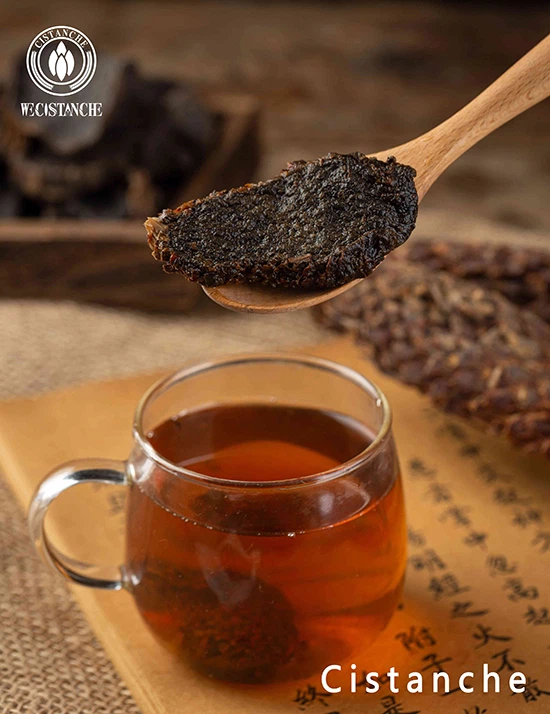
Click here to view Cistanche deserticola tea products
【Ask for more】 Email: xue122522@foxmail.com / Whats App: 0086 18599088692 / Wechat: 18599088692
At present, it is believed that the anti-aging mechanism of most traditional Chinese medicine may be related to its antioxidant effect [9]. In this study, it was found that the active component of Cistanche deserticola can significantly increase the activity of free radical scavenging enzyme SOD in the heart, liver, brain, and kidney tissues of 5-month-old mice, and is sensitive to the action of brain and kidney tissues. The contents of MDA and lipofuscin in the above tissues were also reduced. It is suggested that GCS has antioxidant and anti-aging effects.